
Sign in

About Dr. Sepideh Pezeshki
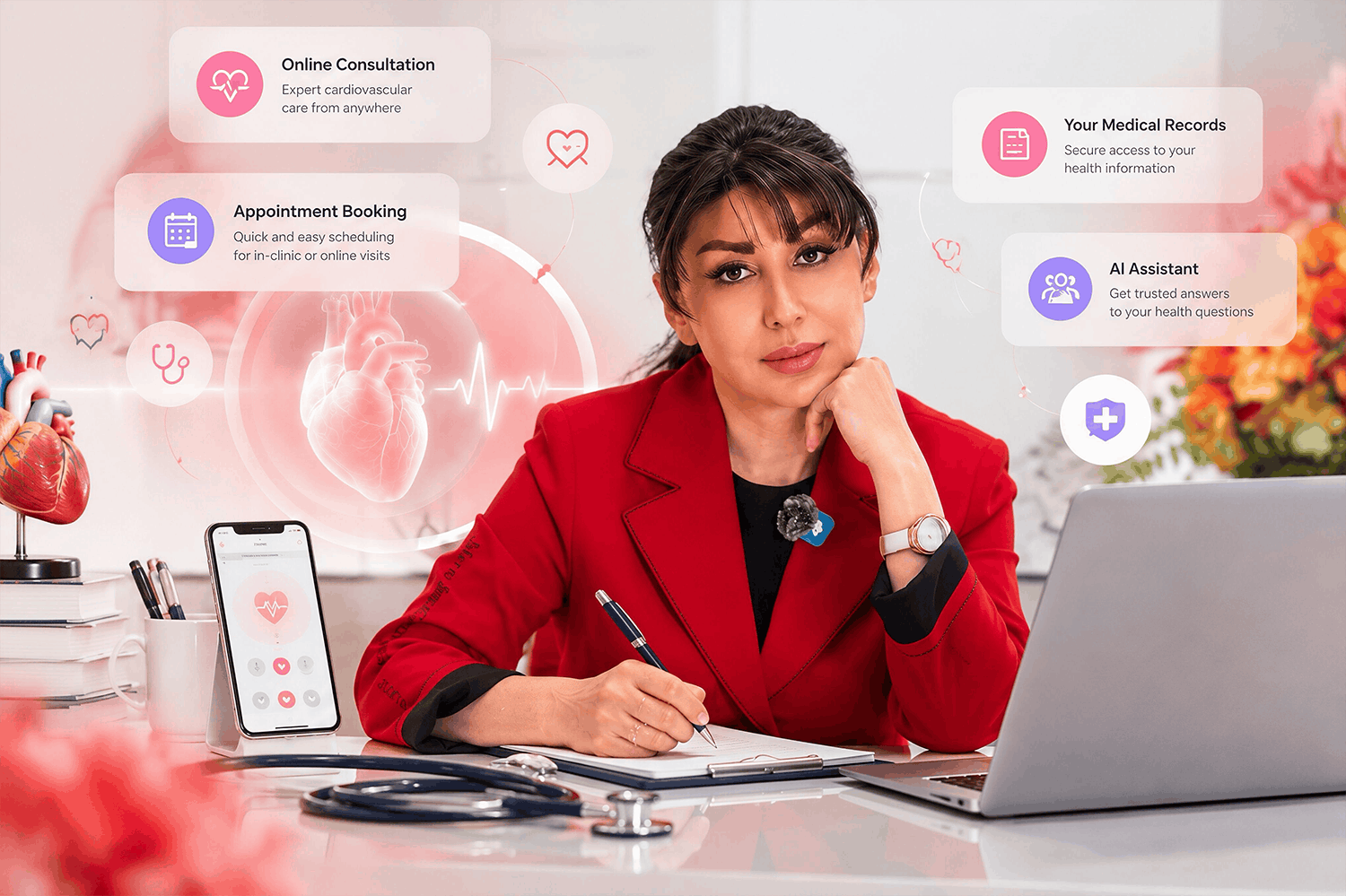
Dr. Sepideh Pezeshki, MD Cardiologist & Vascular Anomalies Specialist

Dr. Sepideh Pezeshki is a board-certified cardiologist with more than two decades of clinical experience in the diagnosis and treatment of cardiovascular diseases and vascular disorders. She completed her medical education at Tabriz University of Medical Sciences and later specialized in cardiology at Shahid Rajaei Cardiovascular Medical Center, Iran University of Medical Sciences, Tehran. Dr. Pezeshki has completed advanced fellowships in Cardiac MRI at Inselspital, Bern, Switzerland, Adult Congenital Heart Diseases, and Phlebology and Interventional Treatment of Benign Vascular Tumors (Hemangioma). Her areas of expertise include: • Cardiovascular disease diagnosis and treatment • Adult congenital heart diseases • Adult and pediatric echocardiography • Minimally invasive treatment of varicose veins • Management of hemangioma, lymphohemangioma, and arteriovenous malformations (AVM) • Multimodal management of scars and skin defects Dr. Pezeshki’s approach is based on accurate diagnosis, individualized treatment planning, and selecting the most appropriate therapeutic strategy for each patient, with the goal of improving function, reducing complications, and enhancing quality of life.

About This Website

This website has been designed to provide patients with a simple, fast, and reliable way to connect with their physician. Through this platform, patients can access medical services both in-person and online, request consultations, learn more about available treatments, and experience a smoother communication process with their doctor. The platform also features a dedicated medical artificial intelligence assistant designed to provide initial guidance, answer common patient questions, offer information about medical services, and help patients access the information they need more quickly. Our goal is to create a modern, trusted, and patient-centered healthcare experience where medical expertise and technology work together to provide better care for every patient.

Frequently Asked Questions

How can I book an appointment?

To book an appointment, go to the appointment reservation section, create your user profile, and submit your visit request. Appointments can be scheduled either in-person or online, allowing you to choose the method that best suits your needs. Additionally, the platform features a specialized medical AI designed to answer your initial questions and assist you in obtaining information and guidance.

How much does the treatment cost?

The cost of treatment depends on the type of lesion, its extent, the affected area, and the required treatment method. Since every patient’s condition is unique, the cost will be determined following a thorough medical assessment and the establishment of a treatment plan. Our goal is to select the most effective treatment approach at the most appropriate cost for each patient.

How many treatment sessions are required?

The number of treatment sessions varies for each patient and cannot be definitively determined at the outset. Following an accurate diagnosis of the type and extent of the lesion, a staged treatment plan is developed, and the number of sessions is determined based on the lesion's response to treatment. Treating vascular anomalies may involve methods such as sclerotherapy, pharmacotherapy, laser therapy, or other specialized techniques.

Is the treatment performed under general anesthesia?

No. Depending on the type of lesion and the procedure, more than 90% of patients do not require general anesthesia. In the case of children—especially very young ones—every effort is made to avoid unnecessary general anesthesia, and pain management is tailored to the child's age and the treatment method. In complex cases or instances involving extensive lesions, treatment is carried out in a hospital setting under the supervision of a pediatric anesthesiologist.

Is medication safe for my child?

Sirolimus is one of the well-known treatments for some complex vascular malformations, especially lymphatic, venous and combined malformations. By regulating the mTOR pathway, this drug helps to control the abnormal activity of cells and reduce the growth of lesions. The drug dose is adjusted based on the age, weight, type of lesion and the conditions of each patient, and the safety of the treatment is maintained with regular laboratory monitoring. The goal is to use the lowest effective dose to achieve the best therapeutic result.

What type of laser is used?

In the treatment of vascular lesions, the choice of laser is based on the type, depth, and characteristics of the lesion—rather than merely on the name or brand of the device. The objective is to select the appropriate wavelength and technology to precisely target abnormal blood vessels while minimizing damage to the surrounding healthy tissue.

At what age can treatment begin?

The assessment of vascular lesions is possible from birth, and if medically indicated, treatment can begin during infancy. The timing for initiating treatment is determined based on the type of lesion, its location, growth rate, the risk of complications, and the potential for functional impairment; it is not decided solely based on the child's age.

Is surgery always necessary?

No. Surgery is not the first-line treatment for many vascular lesions. First, the type, extent, depth, and characteristics of the lesion are precisely evaluated; subsequently, an appropriate method—such as sclerotherapy, pharmacotherapy, laser therapy, endovascular techniques, or, in selected cases, surgery—is chosen. Surgery is performed only when there is a clear indication and it is part of a specialized, staged treatment plan.